Occasionally, we hear about big brands making mistakes. An offensive advertisement or a bad quality product will make the headlines. American companies are particularly notorious for this. The United States has a ‘rights-based’ culture, so if individuals feel that a company has failed them, they will take them to court. Some of these lawsuits may seem ridiculous, and others may seem completely justified. Other times, companies will launch promotions in the hope of making more money. Often, these promotions will backfire and the company will end up losing millions instead. In this blog, I will be looking at three infamous company blunders and the consequences of them.
The first is American Airline’s offer of a pass that will provide unlimited first-class travel for the price of $250,000. Due to the lack of terms and conditions that came with the promotion, the lucky individuals who obtained this pass often abused it, frequently travelling all over the world and costing American Americans millions of dollars. The second is McDonalds, who launched a special promotion for the 1984 Olympics. If the US won medals, customers would obtain free food and drinks. The US’s spectacular performance in this Olympics meant that McDonald’s could not keep up with the requests for free meals, and began running out of food. The third concerns Pepsi. A dead mouse was found in a can of Mountain Dew, which was owned by Pepsi. The company was sued, and made a bizarre claim that Mountain Dew was so acidic that it would have dissolved the body of a mouse.
American Airlines AAIRPASS (1981)
In 1981, American Airlines was desperate to make some more money. After the 1978 decision to deregulate airlines, AA was struggling to compete with the likes of United and TWA. They encountered financial difficulties in the 1980’s, and needed to create a scheme that would generate income. Realising that a lot of their customers were wealthy businessmen who had to travel for work, the airline decided to introduce a special pass. For the sum of $250,000, customers could enjoy unlimited first-class travel indefinitely. For an extra $150,000 they could invite a friend to join them. 28 customers were fortunate enough to obtain these passes. These customers quickly got their money back and then some. They would fly frequently on thousands of domestic and international flights, costing the airline approximately $1 million every year. The lack of terms and conditions meant that these passes were truly unlimited, and had no expiry date. Pass holders really could use them as many times as they liked, for as long as they liked.
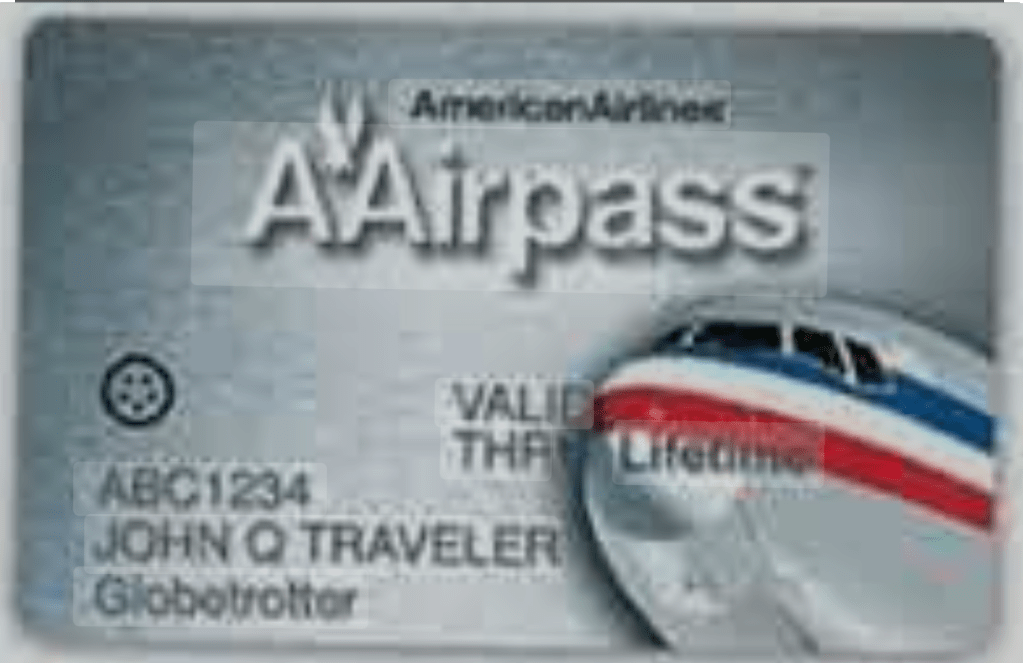
One prominent example was Steve Rothstein, a Chicago-based businessman who bought a pass in 1987. Over 25 years, he took over 10,000 flights to domestic destinations such as San Francisco and Los Angeles, and international destinations such as London, Paris, Tokyo and Sydney. American Airlines discontinued the pass in 1994. However, this only prevented anyone else from purchasing a pass. The 28 people who already had one could keep theirs and continue to use them. In 2008, American Airlines decided to revoke the passes of three customers. Rothstein was one of them. Rothstein sued the airline in 2009 as he claimed that his pass was revoked without any warning. The trial dragged on for two years. In 2011, the judge ruled in favour of American Airlines. Rothstein’s pass was revoked, along with the passes of two other customers. However, 25 other customers have still managed to keep theirs, and can still use them. The passes really are life-long. Normally, if something sounds too good to be true, it is. This promotion was a rare exception, but it backfired miserably on the airline, who lost more money than they gained from it.
McDonald’s Olympic Promotion (1984)
In 1984, the Olympic Games were being held in Los Angeles. Hoping to profit from the excitement, McDonalds began a special promotion entitled “When the US Wins, You Win!”. When purchasing a meal, customers would receive a scratch card with an Olympic event on it. If the US won gold in this event, the customer would win a free Big Mac. Silver meant free fries, and bronze a free soft drink. Obviously, customer numbers swelled as people were hoping to obtain free food and drink. However, there was one major problem. In 1980, the Olympics was held in Moscow. This was during the Cold War, when there was a bitter rivalry between the US and USSR. The US boycotted the Moscow Olympics after the Soviet invasion of Afghanistan on Christmas Day 1979 as a form of sanction against the USSR. This move would come back to haunt the US four years later. The USSR returned the favour and boycotted the Los Angeles Olympics. The USSR was known for producing exceptional athletes, and without their participation, the bulk of the competition was gone.
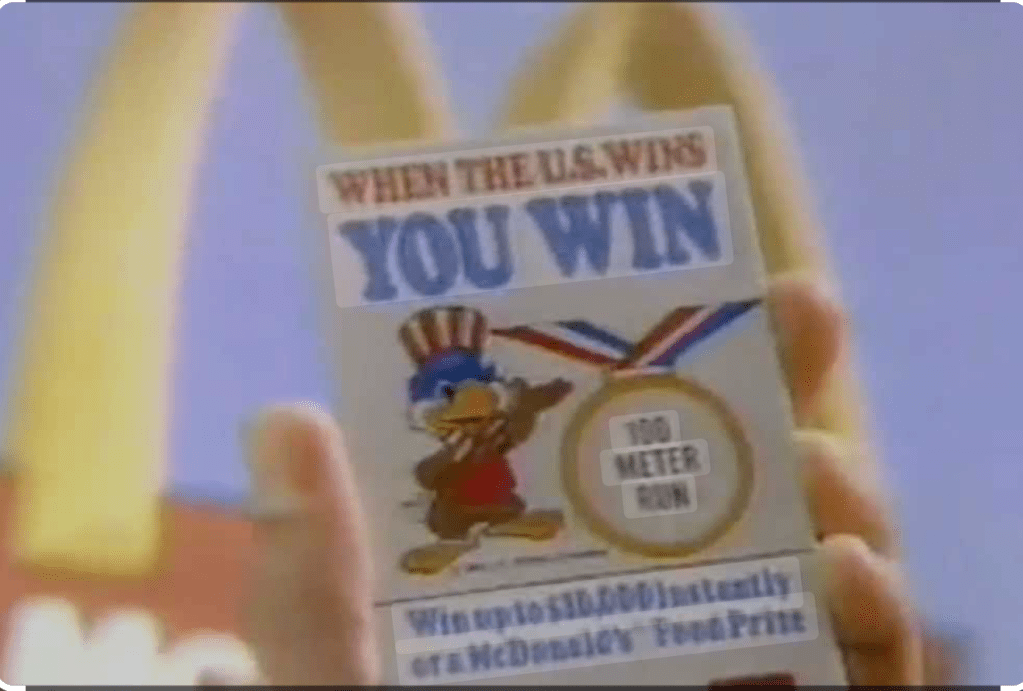
This was great for the US. The country won a total of 174 medals, their best ever result. 83 of them were gold, 61 silver and 30 bronze. This was a problem for McDonald’s. Many customers were receiving their meals for free, costing the company millions of dollars (the exact amount has never been revealed). There were even cases of families possessing multiple winning tickets, meaning that they had to pay next to nothing for their meals. There was also an issue of supply not keeping up with demand. Roughly 6,600 restaurants ran out of Big Macs. Whilst Americans enjoyed the promotion and the free food that came with it, McDonalds did not fare well and a large promotion of this kind has not been repeated.
The Mountain Dew mouse incident (2009)
In 2009, Ronald Ball got a can of Mountain Dew from a vending machine in his workplace in Illinois. He took a sip and noticed that it tasted awful. He inspected his drink and discovered a dead mouse inside. He poured it into a Styrofoam cup and showed his co-workers, who encouraged him to take legal action. Mountain Dew was owned by Pepsi (who have encountered several legal disasters over the years). Ball sued Pepsi for $50,000 in damages. Pepsi chose a very bizarre defence. Rather than claim that they had a strict process of quality control that would mean that a dead mouse would not work its way into any of its products, Pepsi claimed that Mountain Dew was so acidic that a dead mouse would had dissolved. Their exact words were that the mouse would have turned into a “jelly-like substance.”
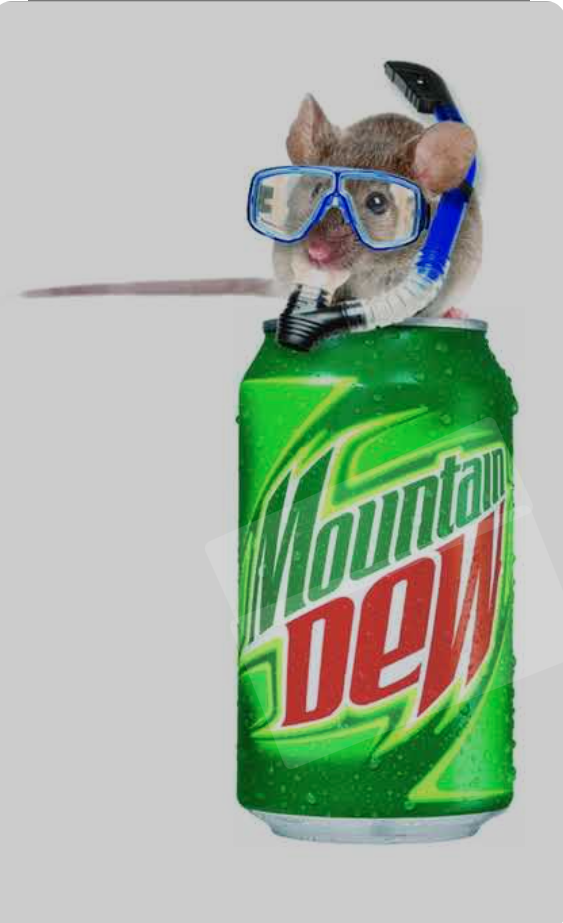
Not only did this defence make people concerned about what they were drinking, it was also false. Scientific experts have stated that even if the drink was as acidic as Pepsi claimed, parts of the mouse such as its tail and fur would have remained. Enough of it would still be present in the drink for Ball to notice it. Mountain Dew has a PH of 3, which not be enough to make the mouse completely disappear. One scientist claimed that enough tissue would remain that the drink would taste of “rubber”. Pepsi also claimed that the can of Mountain Dew was approximately 15 months old by the time Ball drank it. Once again, this made consumers feel concerned about what was entering their bodies. Not only were they drinking something that was highly acidic, it was also old. By trying to defend themselves, Pepsi were digging themselves into a deeper hole. To add insult to injury, Pepsi paid Ball anyway. The case was settled in 2012, and Ball was paid that $50,000 he demanded three years earlier. If Pepsi had just paid him when he first sued them, this PR disaster could have been reduced.
 Stateside Stories
Leave a comment