Background
In the 1980’s the city of Cleveland, Ohio wanted to put itself on the map. It had undergone a massive clean-up operation to reduce homelessness, drug addiction and violent crime. It wanted the same level of recognition that nearby cities such as Chicago, Detroit and New York had. Cleveland was on few people’s radars, and this needed to change. What better way to change this than a massive charity event! United Way is a charity that was founded in 1900. Its goal is to help people who are struggling with poverty and unemployment. The Cleveland branch was one of its first and largest. In order to raise money for the branch, an idea was formed to hold a massive public spectacle which would both raise money and provide the city of Cleveland with plenty of publicity.
The year of 1986 was a big one for charity events. Just a few months before Balloonfest, Hands Across America took place. This was a charity event held to raise awareness about the issue of food poverty. Over 5 million people participated, holding hands in a chain that started in New York and ended in Los Angeles. The event raised $15 million and saw the participation of celebrities and the US President Ronald Reagan. It broke the world record for the longest human chain, and dominated headlines. United Way also wanted to break a world record. This world record would be for the largest simultaneous balloon release. Millions of balloons would be released into the sky, creating a marvellous sight. It would be an event that anyone could participate in, much like Hands Across America, and t-shirts would be sold to raise money. It seemed like a brilliant idea. What could possibly go wrong?
Preparation
The event took 6 months to prepare. A Los Angeles based balloon company was chosen to help plan the event, providing the event organisers with 2 million balloons to release. 2,500 students volunteered to help inflate the balloons. They also encouraged the general public to sponsor the event. The plan was that people could sponsor 2 balloons for $1. A lot of people agreed to sponsor the event. It was particularly popular amongst families as the event appealed heavily towards children. The event was able to raise nearly $1 million through these sponsorships, with public enthusiasm for the event being very high. The central location of the Public Square was chosen as the site to release all of these balloons. A massive rectangular structure was built, with a giant net built on top to store the balloons in before they were released. On the morning of the 27th September, it appeared like everything would go to plan.
The Release
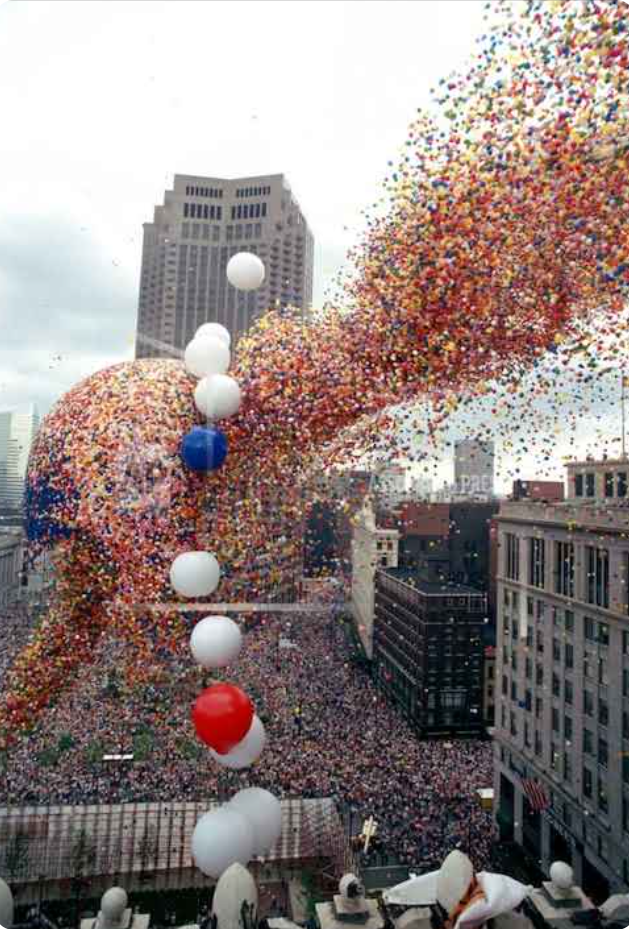
2 million balloons were meant to be released. However, a storm was approaching, and the balloons were released earlier than planned, at 1:50 pm. 1.4 million balloons were released instead. Whilst this number was smaller than expected, it still broke the world record for the most balloons released simultaneously. For a short while, the event appeared to be successful. The balloons floated into the sky as millions of onlookers watched in amazement. However, the plan to release them into bad weather quickly came back to haunt the organisers of the event. As the balloons encountered cold air, heavy clouds and rain, they began to descend back down to Earth much earlier than planned. Rather than deflating whilst still in the air, they fell back down the ground whilst still inflated. This would cause numerous problems.
Consequences
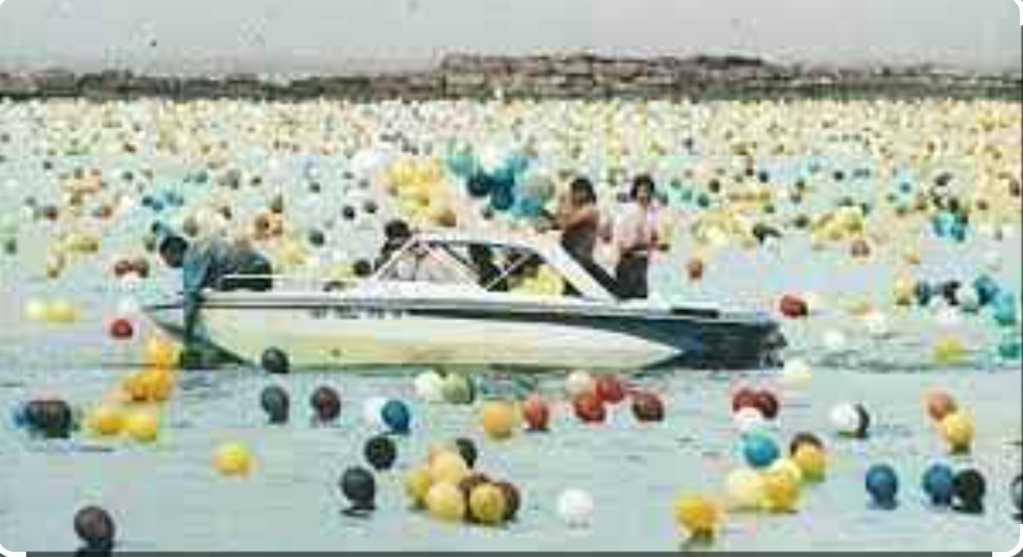
As the still-inflated balloons fell back down to Earth, the realisation that this was a bad idea dawned on the people of Cleveland. The balloons blocked the roads and distracted drivers, causing several minor car accidents. Roads had to be closed off as they were not safe to drive on. Pavements and waterways were blocked by thousands of balloons. It was extremely difficult to move about in the city, and many people found themselves stranded. Thousands of balloons landing in Lake Erie was an environmental disaster. Lake Erie was heavily polluted, and the devastating consequences for marine life has recently become a topic of conversation. Countless animals more than likely died after ingesting these balloons. Burke Lakefront Airport had to close as hundreds of balloons blocked the runways, causing severe disruption. The balloons also spooked a couple of horses, causing them to sustain injuries and their owner suing both the City of Cleveland and United Way for $100,000.
The most tragic consequence of Balloonfest was that it disrupted the search for two fishermen who had gone missing. Raymond Broderick and Bernard Sulzer had been reported missing by their families on the 27th September, the day of the event. A search of Lake Erie was conducted, but it was difficult to find the men amongst the hundreds of balloons that had landed in the lake. The rescue helicopter encountered difficulties reaching Lake Erie, and rescue boats struggled to navigate the balloon-filled waters. With the lake so obstructed, the search had to be postponed. Sadly, on the 29th September, the bodies of both men washed up on the shore. The wife of one of the men sued Balloonfest and United Way for $3.2 million. They ended up settling out of court.
Balloonfest and United Way encountered several law suits in the months following the event. Many car drivers who had been in traffic accidents filed a class-action suit. Millions of dollars’ worth of property damage had been sustained. Farmers were unhappy that their livestock had ingested the balloons, causing serious injuries and even death. These suits, along with the suit filed by the owners of the horses and the wife of one of the fishermen, cost United Way and the organisers of Balloonfest millions. The costs of the law suits heavily outweighed the money raised by the event. Rather than raising money like it was supposed to, Balloonfest ended in a massive loss of money. To add insult to injury, the world record Balloonfest set for the most balloons simultaneously released was broken after just six years. Disney broke the record in 1994, when they released 1.59 million balloons in a much more well organised event. Balloonfest’s legacy is that it was the most destructive charity event in history, and proof that good ideas can be executed horribly.
 Stateside Stories
Leave a comment